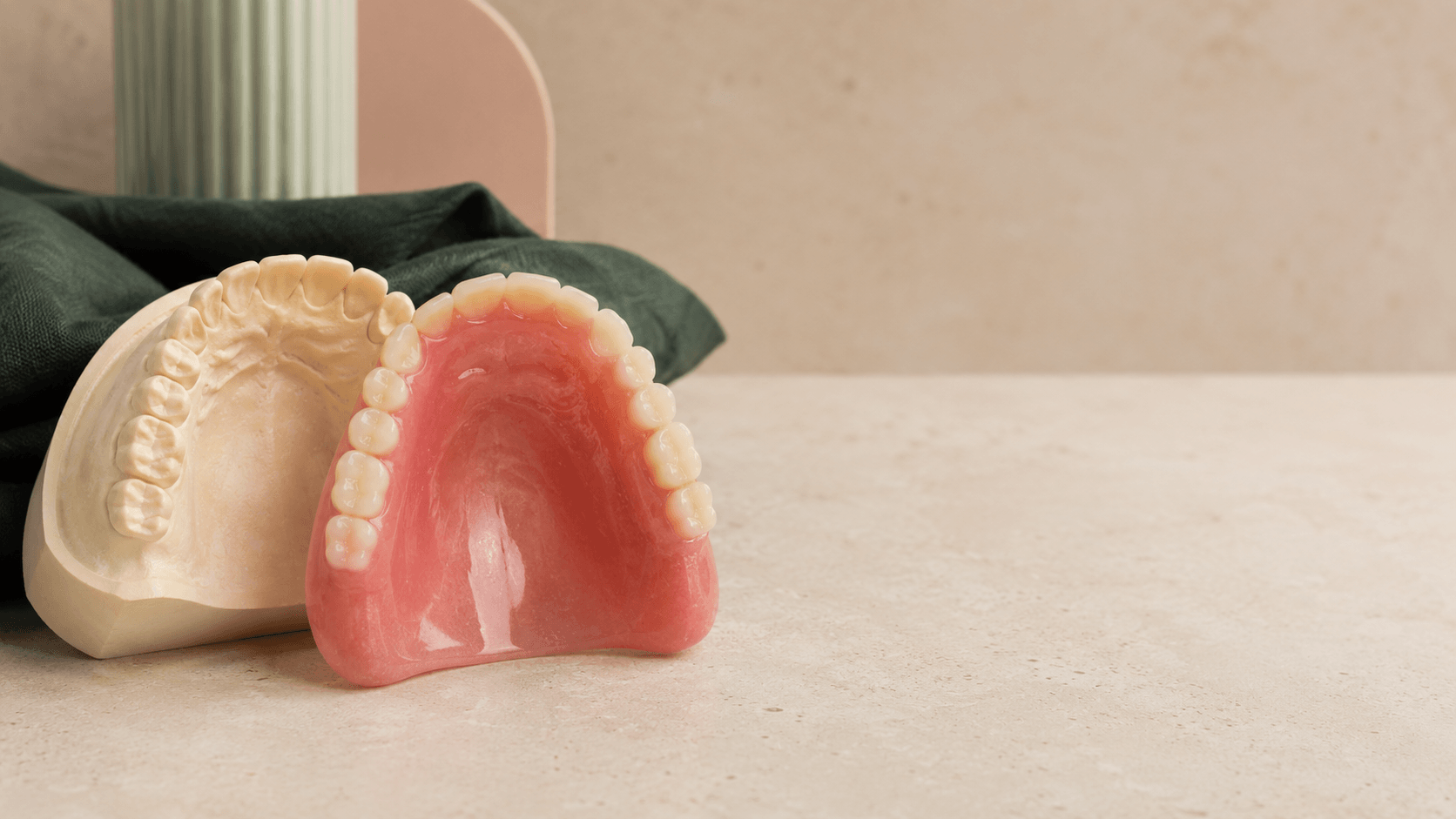
Denture relines — restore your fit without replacement
Loose, uncomfortable dentures don't always mean you need a new set. A reline reshapes the inside of your existing denture to match your current gum contours — restoring comfort, stability and function at a fraction of the cost of replacement.
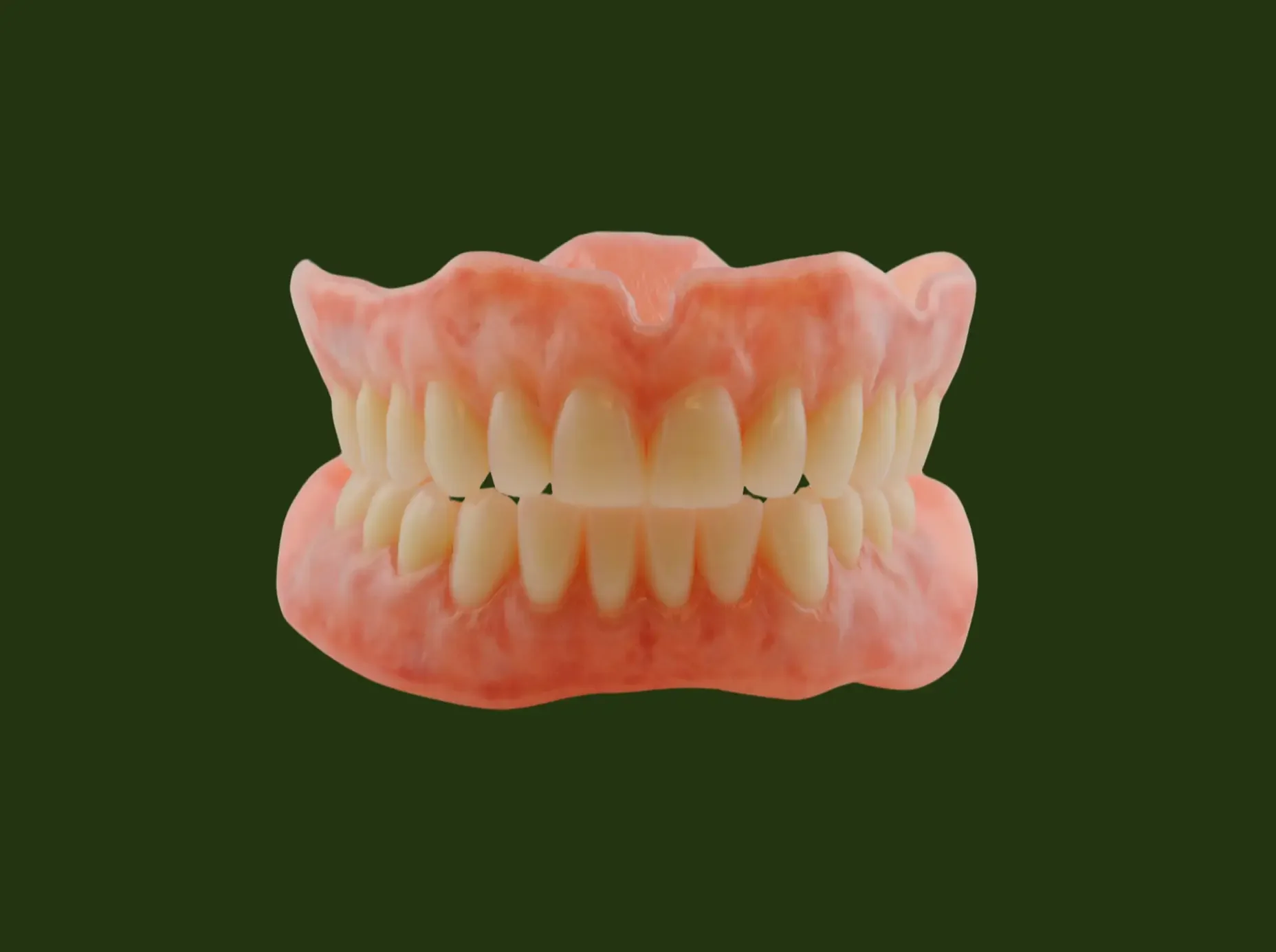
WHAT IS A DENTURE RELINE
Why dentures become loose and how a reline fixes it
Over time, your jaw bone and gum tissue naturally change shape — particularly in the years following tooth loss. This process, called bone resorption, means that dentures which once fitted perfectly can gradually become loose, unstable or uncomfortable. Many patients assume this means they need a completely new set of dentures — but in most cases, a reline is all that's needed.
A denture reline involves adding new material to the fitting surface (the inside) of your existing denture to reshape it to match your current gum contour. The result is a significantly improved fit that feels like your dentures are new again — at a fraction of the cost of full replacement.
When do you need a reline? If your dentures feel loose, slip when eating or speaking, have become uncomfortable, or require adhesive to stay in — these are all signs that a reline is likely overdue.
THE PROCESS
How we reline your denture
A reline is a straightforward process. Here’s what to expect.
01
Assessment
We examine your dentures and your gums to assess fit, identify pressure points and confirm a reline is the right solution.
02
Impression in your denture
A soft impression material is placed inside your existing denture and you bite down — capturing the current shape of your gums.
03
Processing
For a lab reline, the denture needs to be left at the lab for processing. For a chair-side reline, processing happens during your visit.
04
Delivery & Aftercare
Your relined denture is returned, fitted, and adjusted for optimal comfort and bite.
IS THIS RIGHT FOR YOU?
Who needs a denture reline?
A reline is recommended for most denture wearers every 1–2 years, and sooner if you notice signs of a loose or uncomfortable fit.
Dentures that slip when eating or speaking
Slipping dentures are one of the most common reasons patients come to us — and a reline almost always resolves it.
Patients requiring denture adhesive
If you rely on denture adhesive to keep your dentures in, a reline can often eliminate this need entirely.
Patients who've had extractions recently
Significant bone resorption occurs in the first 6–12 months post-extraction — a reline after this period is often recommended.
Long-term denture wearers
If you haven't had your dentures relined in more than 2 years, a reline is likely overdue regardless of how they feel.
Patients experiencing gum soreness
Ill-fitting dentures create pressure sores. A reline redistributes the load evenly across the gum surface.
Patients not ready for replacement
If a full replacement isn't feasible right now, a reline can significantly extend the life and comfort of your current dentures.
Not sure if this is right for you?
If your dentures are very old or have had multiple relines already, a full replacement may be more appropriate. We'll give you an honest assessment — no pressure either way.
COMMON QUESTIONS
Frequently Asked Questions
Common questions from our patients about the denture reline process. Can’t find your answer? Give us a call.
-
Reline costs vary depending on whether it's a chair-side or lab reline. Lab relines are more comprehensive and longer-lasting. Contact us to discuss pricing before booking — we'll be upfront about all costs.
-
Most patients benefit from a reline every 1–3 years, depending on how quickly their jaw changes. If you notice looseness or discomfort before that, don't wait — come in sooner.
-
A chair-side reline is completed in a single appointment using materials processed in the clinic. A lab reline is more comprehensive — the denture is sent to the lab overnight for a more durable, precisely finished result.
-
For a lab reline, you'll need to leave your dentures with us for 1–2 days. We'll discuss this with you before proceeding so you can plan accordingly.
-
Most complete dentures and acrylic partial dentures can be relined. Metal framework partials can have their acrylic portions relined. Flexible Valplast dentures cannot be relined.
What Patients are Saying
Tired of loose or uncomfortable dentures?
Book a reline assessment. We'll let you know honestly whether a reline, repair, or replacement is the right next step for you.